Showing posts with label MGM. Show all posts

Monday, November 7, 2022

Eleanor Thatcher - Who was she?

What about a video post with the collected works of Eleanor Thatcher? Who was this dame? I have no information on her what so ever. She came in from nowhere, did her stuff and then disappeared in total oblivion. Did she have her 15 minutes of fame or was she even considered famous? Apparently she was contracted to MGM in 1932 but never made it to stardom. I don't see why. Eleanor was a great singer and had a wiggle to die for. Sadly she only appeared in three minor productions of this era. Luckily all of her work has survived to our times. If anyone of you out there knows anything about her, please let me know. We start off with a MGM Colortone short from 1932, Wild People, starring Harry Jans and Harold Whalen as zany radio-guys on location in Dutch New Guinea of all places. Eleanor steps in at the end to participate in one of the most remarkable and bizarre numbers ever caught on film, Panther Lady, with music by George Frank Rubens and choreographed by Daniel Dare. The Panther Lady herself is Joyzelle Joyner who arguably is the most well known name in this little gem. Joyzelle was a house dancer at MGM and appears here and there when there was a need for some exotic sexiness. For instance she can be seen in DeMilles Sign Of The Cross. "Panther Lady - A Little wild but not too rough" The next time Eleanor appears is in another MGM Colortone short, also from 1932. Over The Counter, one of the most sexually insinuating shorts MGM ever did. The setting is Drake's department store where housewives can check their husbands while shopping. Wonderful! Eleanor sings and wiggles like never before dressed up in something that almost looks like a Christmas cracker. Young Mr Drake is played by Emerson Treacy who did a lot of TV in the 50's. We also see Maurene Marseilles singing a forgettable number in her only screen appearance. Both songs are written by the very same George Frank Rubens. "A great big sofa may give more comfort than a chair" The last time we see Eleanor Thatcher on film is in a quite racy sexploitation movie from 1933. Road To Ruin, made by Willis Kent Productions who did mostly B-westerns and titles like The Wages Of Sin and Race Suicide. You know the stuff. Road To Ruin is no exception. A young girl gets involved with a crowd that smokes marijuana, drinks and has sex. She winds up an alcoholic, pregnant drug addict and is forced to get an abortion. But, right in the middle of the 63 minute epic we get Eleanor and her fantastic wiggle again. She can only be seen for about a minute, but what a minute! Jimmy Tolson sings Campus Crawl and Eleanor struts her stuff for the last time. "Boy! Look at that girl go! Is she hot!"

Wednesday, January 25, 2012

The recycling of music in The Artist

There is an ongoing debate surrounding the choice of music in the French Oscar-nominated silent film The Artist. Legendary actress Kim Novak is accusing the French director Michel Hazanavicius of musical rape because of his use of a snippet of Bernard Herrmann’s score from Hitchcock’s Vertigo. This is an opportunity for me to give my thoughts on the recycling of music in the movies

Bernard Herrmann's score to Vertigo (1958)

First some background:
In the dawn of film there were no particular scores, theme songs or soundtracks. But as the films didn’t have a soundtrack the air had to be filled with something. Music was of course a natural choice. The smaller houses had a pianist or a couple of musicians at most, maybe a trio that also worked at the nearby restaurant. The bigger cinemas often had orchestras. Sometimes a band of 8 to 12 players if it was a medium sized city theatre. If the cinema also doubled as a regular theater or music hall venue the orchestra could be bigger. The really big palaces that were built after WWI could house a full size symphony orchestra. The Roxy in NYC opened in 1927 had a very large orchestra of more than a 100 players.

The cinema often had a musical director who in most cases also was head of the orchestra. The musical director took bits and pieces of well known classical music that fitted particular scenes or emotions and put together a program of sorts for each film. The use of already existing music was thus commonplace from the very beginning of film history.

The Scala Theater in Brighton UK 1930

With time, the bigger cinemas developed a quite vast musical library to use. Well known pieces by Verdi, Wagner, Beethoven and other masters were used to the extent that they became synonymous with particular moods or scenes in the movies. The more creative musical directors sometimes also wrote transitional music to fill out the gaps.

By 1915 the studios had become aware of the importance of music as it clearly had become a part of the movie going experience. It was at this time the first commissioned scores appears (Read more about the early days of movie scores and theme songs here)

This was also a time when the hit songs were born. Some songs could sell a million copies in sheet music alone. With the portable phonographs of the late teens records became more common. Records had been more or less a luxury item up until this time. A single sided opera record could sell for as much as $6 in 1910. (that would be about $100 today). Then came radio and the modern music business was born. The hit songs now quickly found their way into the movies.

It was more common that the songs went through a music publisher rather than through the movie studio. The studio could often commission the song but didn't own the rights to sell sheet music or records. With the advent of the talkies the music could be nailed to the filmstrip. The studios set up musical departments almost immediately.

Prolific song writers of Tin Pan Alley in NYC were hired and often got very lucrative deals with the Hollywood studios that now had a never ending need for songs and scores.
This is why the early musicals (pre 1934) have so many good songs. Hollywood hired the best composers and lyricists they could find. Cole Porter, Irving Berlin and teams like the Gershwins, Freed & Brown or Brown DeSylva & Henderson.


Business as usual at a Tin Pan Alley music publisher in 1929

Most of these songs are still evergreens. There was an avalanche of hit songs that got even more power from radio performances. All this marketing power made the songs stick in peoples ears forever. The movies the songs first were used in were quickly forgotten but the songs themselves lived on and still does.

Incidental music and scores that was not considered stand alone songs however, did not have the same life or commercial value. The songs were usually commissioned from someone like Cole Porter, but the incidental music was written by a staff composer, sometimes using the themes from the different commissioned songs, sometimes not. The composer to the incidental music often never received any credit in the final product as he was on a monthly salary at the studio. It was the stand alone songs that were important.

Marion Davies, Nacio Herb Brown and Arthur Freed (1934)

It goes on more or less like this until Orson Welles commissioned an entire score from newcomer Bernard Herrmann for Citizen Kane in 1940. No hit songs, just a great big score by Herrmann alone, including a fabulous aria from a fictitious Opera - Salammbô, written in the strict post-romantic style of Richard Strauss or Giacomo Puccini. Spotify link: Salammbô's Aria from Citizen Kane
To me this is the birth of the modern film score that had begun with the commissioned scores to the silent movies 20 years earlier. The composer now also recived credit, sometimes even on the poster.

Bernard Herrmann in the 1940's

The case with The Artist:
I think it's difficult to re-use a score or pieces of it as this often instrumental music more or less serves as a backdrop to the scenes in the movie. In that respect I give Novak a point. It would be awkward to use really prolific scores like Star Wars or Jaws for other pictures that are not parodies of the original films.

If the composer to a new score use a few bars or a theme from an old score as a nod or homage to the original composer I think it should be considered a nice gesture rather than a rape situation. It's all a matter of style and how it is done. In the Artist it is beautifully done and clearly serves as homage to Herrmann. What is even more important is that Hazanavicius has permission from Herrmann's estate and his publisher to use the music in his film.

Herrmann used bits and pieces from the great masters himself. There is a lot of inspiration from both Mahler and Strauss in many of his early scores. Another great composer, John Williams is often stealing bits and pieces from others to his scores (which I often think are better than the films they were created for). The best example is perhaps Erich Wolfgang Korngold's score for Kings Row (1942). If you listen to the main theme you hear a mix of Superman and Star Wars both written 35 years later by Williams. Spotify Link: Kings Row (Main Theme) - Erich Wolfgang Korngold

Songs on the other hand can be used many times in many different films. The important thing is that they fit in. In Sofia Coppola's Marie Antoinette, the filmmaker makes a statement by only using modern hit songs, most certainly to attract a younger audience to a period film. I think that is incredibly cheap! Imagine a 1940's film with a contemporary score by Gaga, Beyonce or 50 cent, it would be totally wrong.


Singin In The Rain from Hollywood Revue of 1929

The use of old songs in Singing In The Rain is a celebration of the first hit composers and the songs that were used in the first talking pictures. Singing In The Rain by Arthur Freed and Nacio Herb Brown was a hit in 1929 because of it's inclusion in The Hollywood Revue of 1929, but became an even bigger hit in Singing In the Rain in 1952. Many songs used in movies didn't become hits until they were re-cycled in other movies. This go way back, I have no good examples here but an instrumental theme used in a 1942 film could very well get lyrics and be re-used in a 1948 movie and then become a major hit.
I have no problems with that. The difficult task is to use the right music at the right time.

Conclusion:
Dear Kim Novak, I’m sorry to say it but the use of Bernard Herrmann’s score in the Artist is definitely not a rape situation. Not even a slight groping to put it bluntly.

A French behind the scenes featurette in color from The Artist 2011

Thursday, November 17, 2011

Mamba at the Astor in Melbourne - Part 2

This post is continued from last weeks post about the Mamba world premiere at The Astor in Melbourne on Nov 21 at 8pm.

In the first post I wrote about Mamba's and Tiffany Pictures historical background. In this post I will write about the actors in the leading roles of the film. Unfortunately they are almost forgotten today, at least if you compare them to superstars like Garbo or Gable.

Mamba was very well received by the audience as well as by the press.  Tiffany had made sure the film would become a smash hit by hiring some of the most prominent actors at the time for the lead parts.

Jean Hersholt 1927
August Bolte - Jean Hersholt
Jean Hersholt was born in Copenhagen, Denmark in 1886, the son of Clair and Henry Hersholt, both actors at the Danish Folk Theatre. From an early age young Jean went on tour performing with his family all over Europe. Back at home in Copenhagen he went to art school and soon got recognition for his fine pencil drawings.
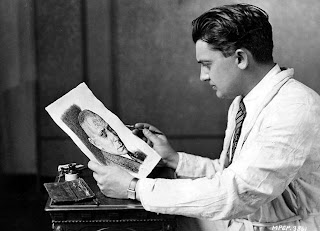
Hersholt drawing von Stroheim (1923)
But it was the acting that really got him. After some years at the art school he went on to acting school at the Dagmar Thaatre in Copenhagen. In 1906 he had roles in three of the earliest films produced for the Danish market. Those were all short comedies, very typical of the times. At 22, in 1908 he left Denmark for Canada and settled down first in Montreal then on to New York. In 1914 he left New York for Hollywood. In 1915 he was hired as responsible for the Danish pavilion at the Pan Pacific exhibition in San Francisco. It was at this time he met Thomas Ince, a Hollywood producer and director. Ince soon realized Hersholt was made of the right stuff and hired him as one of his regulars. Hersholt played in most of Inces films 1918-22. He even got to direct some of the films he played in. Ince is mostly known today because of the scandal surrounding his death in 1924 when he suposedly was killed aboard W.R. Hearst’s yacht.
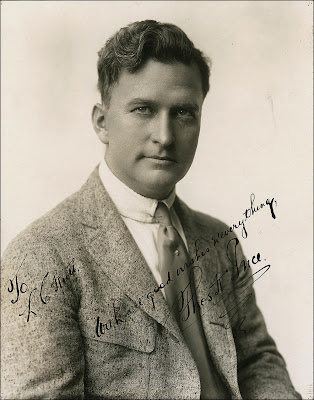
Thomas Ince
Hersholt’s career took a big leap in 1922 when he got one of the leading roles in John S. Robertson’s Tess of The Storm Country with Mary Pickford. Then on to von Stroheim’s giant epic Greed, in which he played Marcus Schouler, the villain. Showing he was capable to shine in almost any role given to him he quickly became a regular first at Goldwyn and Paramount and later at MGM.
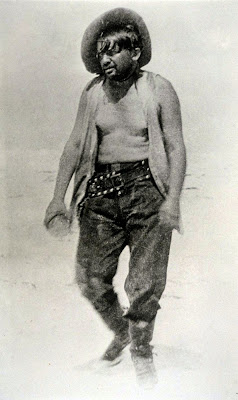
Greed (1924)
Hersholt made the transition to talkies without any difficulties, his Danish accent was no problem. With the arrival of the talkies his roles shifted from villains to caring father figures, teachers and European noblemen. At MGM he had big supporting roles in prestige productions like Grand Hotel (1932) and Dinner At Eight (1933). He was Shirley Temple’s grandfather in Heidi (1937).
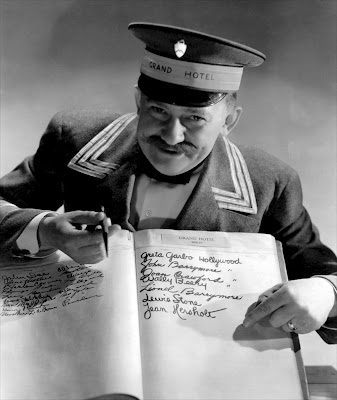
Grand Hotel (1932)
But it was the role as a doctor that would provide a continuing vehicle for Hersholt and something of a fateful direction for the actor. The mid-30s were abuzz with the births of the Dionne Quintuplets in Canada. Hollywood jumped on, highlighting the story and the officiating obstetrician, Dr. Dafoe, who was translated into Dr. John Luke, in The Country Doctor (1936). Hersholt brought the right ingredients to the part of Luke and two years later a sequel followed, Five of a Kind (1938). Hersholt was enthusiastic about a series of movies, but Dafoe himself blocked this idea. Nevertheless, in 1937 Hersholt had already germinated a new radio series to continue portraying a dedicated and kindly small town doctor. For a character name Hersholt turned to his most beloved author, his countryman, literary light Hans Christian Andersen, for a name-Dr. Christian. It was a hit and, and he convinced RKO Radio Pictures to bankroll a series of six Dr. Christian films (1939-41). The radio series stayed on the air every week for 17 years, about 800 episodes.


In the early 1940's Hersholt more or less left the movies but stayed in the business working with many different charity projects. In 1939 he funded The Motion Picture Relief Fund, an organization that helped to support industry employees with medical care when they were down on their luck and was used to create the Motion Picture Country Home and Hospital in Woodland Hills, CA. This led to the creation in 1956 of the Jean Hersholt Humanitarian an honorary Academy Award given to an "individual in the motion picture industry whose humanitarian efforts have brought credit to the industry". Hersholt was President of the Academy of Motion Picture Arts and Sciences 1945-49. Another lesser known function he had was as Chairman of the Hollywood chamber of commerce in the early 1950’s and as such he helped negotiate the rights for the Scandinavian Airlines transatlantic flights in 1954. He was very proud of being Danish, throughout his life he helped spread Danish and Scandinavian culture to the world. One of his major achievements was translating all of Hans Christian Andersens stories to the English language. His translations are still regarded as the best.
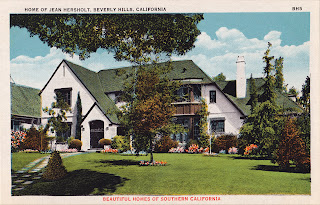
Jean Hersholt's home in Hollywood
Jean Hersholt made 443 films, got two honorary Oscars and is one of few who has two stars at the Hollywood walk of fame. One for his contributions to Motion Pictures, the other for his extensive radio work. Jean Hersholt died of pancreatic cancer in 1956, only months after having introduced Dr Christian to TV.
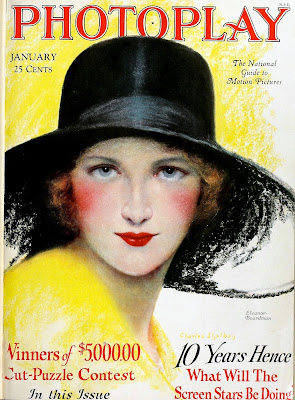
Eleanor Boardman - Photoplay January 1928
Helen von Linden - Eleanor Boardman
Born in Philadelphia 1898 to strict, Presbyterian parents. After graduation from The Academy of Fine Arts in her home town she left for New York hoping for a career on Broadway. When that didn’t work out as expected, she became a model for Kodak. This worked out splendidly and she eventually became the official Kodak Girl. With her face on posters all over the country she was of course hoping for some movie mogul to spot her and take her to Hollywood.

Eleanor Boardman early in her career
After some time as Kodak girl she heard that the Selwyn Organization, a major producer of Broadway plays, was looking for girls with no stage experience. Since she was more than qualified in that respect, she tried out for the job and before she knew it she was in the chorus line of a production called "Rock-a-Bye-Baby" until the show closed three months later. Unfortunately she caught laryngitis and temporarily lost her voice, making it difficult to continue on the stage. It was at this time that a casting director for Goldwyn Pictures hit the Broadway scene looking for new faces. She tested for him and impressed him enough that he finally picked her out of a pool of more than 1000 young girls who tested for the opportunity to go to Hollywood.
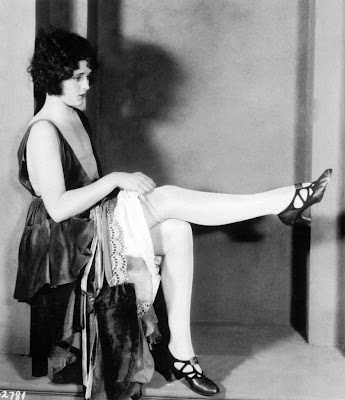

Well in Hollywood followed months of fruitless effort until one day Rupert Hughes saw her riding a horse and gave her a part in a film and she quickly began to attract audiences. She was chosen by Goldwyn Pictures as their "New Face of 1922", through which she signed a contract with the company. After several successful supporting roles, she played the lead in 1923's Souls for Sale. Her growing popularity was reflected by inclusion on the list of WAMPAS Baby Stars in 1923. Her contract was renewed in 1924 when Goldwyn merged with Metro and became MGM.

Souls For Sale (1923)
She appeared in fewer than forty films during her career, achieving her greatest success in Vidor's The Crowd in 1928. Her moving performance in that film is widely recognized as one of the outstanding performances in American silent films. She ultimately stayed with MGM until 1932. Boardman retired in 1935, and retreated completely from Hollywood and public life. Her only subsequent appearance was in an interview filmed for the Kevin Brownlow and David Gill documentary series Hollywood in 1980.

With James Murray in The Crowd (1928)
1926-31 Boardman was married to the film director King Vidor, with whom she had two daughters, Antonia born 1927, and Belinda born 1930, just before shooting of Mamba started . In September of 1926 fellow actors John Gilbert and Greta Garbo had planned a double wedding with them, but Garbo broke off the plans at the last minute. Boardman's second husband was Harry d'Abbadie d'Arrast to whom she was married from 1940 until his death in 1968. She died in Santa Barbara, California at the age of 93.
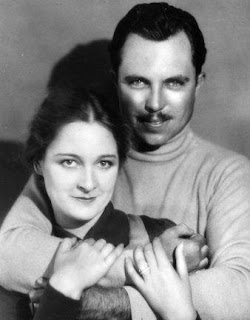
Eleanor Boardman and King Vidor
Eleanor Boardman has a star on the Hollywood Walk of Fame for her contributions to Motion Pictures.
Mamba was her first talkie and the only film she made in color.

Ralph Forbes by Clarence Sinclair Bull (1928)
Lieutenant Karl von Reiden - Ralph Forbes 
There is a lot of confusion about Forbes birth date. The date varies from 1896, 1901 to 1904. According to the Civil registration records in the UK, September 30, 1904 is the correct date. Born in an acting family in London, England. Both his parents and little sister were stage actors so the choice of profession might have been easy for young Ralph. He started his career on stage as a teenager in London. This led to some roles in British films, among them the early color movie His Glorious Adventure, shot in Prizmacolor 1922, and also a Swedish version of Charley's Aunt shot in England and Sweden between 1922-26 before leaving for Hollywood in 1926 to play fellow Englishman Ronald Coleman's brother in the Paramount big budgeter Beau Geste.

Beau Geste (1926)
In 1924 Forbes married the celebrated Broadway actress Ruth Chatterton who was eleven years his senior. The couple settled down in Hollywood and Chatterton soon also made her debut on the silver screen.
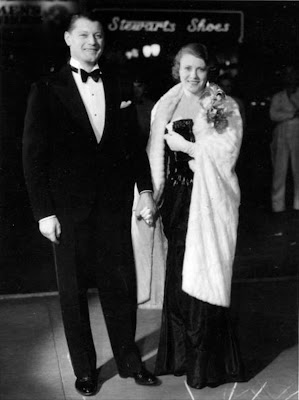
Ralph Forbes and Ruth Chatterton
Forbes striking looks made things easy and he got quite important roles almost immediately. He was cast against many of the biggest names right from the start. Norma Shearer, Lon Chaney, Dolores Del Rio, Clara Bow, Corinne Griffith and so on.
Forbes and Clara Bow in Her Wedding Night (1930)
Ralph Forbes was perhaps not one of the bigger names in Hollywood, some might even describe him as an MGM bit player, but considering he made about five films a year throughout the 30's and who he made those films with I think it's fair to call him a true movie star.
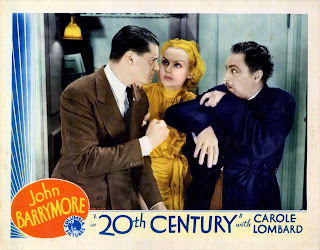
Forbes about to hit John Barrymore in the face in 20th Century (1934)
Forbes and Chatterton divorced in 1932. Forbes Movie career basically ended in the early 40's but got some new life with the arrival of TV and the Playhose series. In 1951 Forbes fell ill and passed away far to early, he was 46.
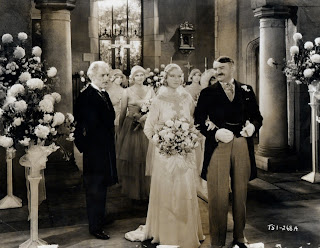
Eleanor Boardman and Jean Hersholt in Mamba
Mamba is a phenomenal early all color talkie that deserves its place in Movie history. Come see for your self and have a chat with me on Monday night at the Astor in Melbourne. Tickets are still on sale!

Tuesday, December 8, 2009

An early talkie Christmas - Part 2

Just when we thought we had seen it all Warner Archive is releasing yet another batch of four totally brilliant early talkies to add to your wish list in the "must have" section.
The Show Of Shows (1929) was Warner's contribution to the revue craze that had begun a few months earlier with MGM's Hollywood Revue. However, this revue is probably the least magnificent of them all. It's incredibly stagy and drags on for just over two hours. All of it but the prologue was originally in color but the only color sequence still present in most prints is the Chinese Fantasy featuring Nick Lucas and Myrna Loy. I have heard rumors of more existing color footage but I have never seen any of it. Winnie Lightner's rendition of Singing In The Bathtub surrounded by a troupe of all male bathing girls is probably the most memorable number from it. So Long Letty (1929) This is a must for all of us fans of Charlotte Greenwood and it's her talkie debut. There are actually two So Long Letty movies based on the same play by Oliver Morosco and Elmer Harris. The original play opened at the Broadway Shubert Theatre in 1916. Charlotte Greenwood did Letty on stage and the role was something of a breakthrough for her. In the first movie version made in 1920, Greenwood was overlooked and the role instead went to Grace Darmond. I guess Charlotte may have been located at the east-coast at the time. The 1920 version is still very interesting as it is one of Colleen Moores earlier pictures. As far as I know it's believed to be lost, like so many other of Colleen's movies are. Both movies are pure farce. The basic plot is a wife-swapping game. Two couples are next door neighbors. Although Harry loves his sweetly domestic wife Gracie, sometimes he longs for somebody a little more festive. On the other hand, Tommy wants nothing more than a lot of well-cooked meals while his spouse, Letty would rather go dancing. The two men get together and decide they'd be better off if they switched wives and work on encouraging their better halves to get divorces. But Letty and Grace catch on to their plan and spoil it by suggesting a one-week trial. During that week, they treat their temporary husbands so abominably that the men are more than glad to have their original wives back. The 1920 version sticks fairly close to the Oliver Morosco play on which it was based. The talkie version directed by Lloyd Bacon adds a few plot twists, is slightly modernized and contains some catchy songs. Here's Charlotte in one of them, My Beauty Shop.
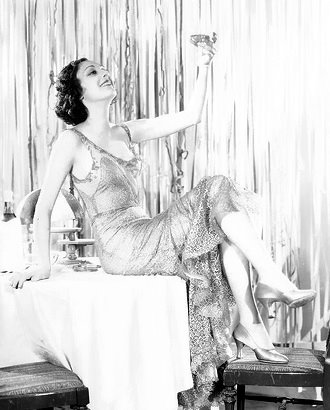
Let me see your bald spot - it fascinates me!
We move on to some pre-code grit with Ann Dvorak, one of our favorite pre-code actresses who just a few years earlier had been one of MGM's leading chorus girls and dance director Sammy Lee's assistant. In the spring of 1932 Ann Dvorak made three movies that definitely made her go from chorus girl to character actress. Scarface, The Crowd Roars and The Strange Love of Molly Louvain. The last of them is now finally out on DVD. Directed by Michael Curtiz (Casablanca), it is an odd story about a woman torn between different but equally bad guys. Lee Tracy is memorable as the reporter who tries to save poor Molly from the gutter.
Ann Dvorak as Molly Louvain
The best thing with Molly Louvain is the theme song written by Val Burton and Will Jason, When We're Alone or Penthouse Serenade as it often is called. An absolutely beautifully written song with clever lyrics. Please listen to this fine rendition by The Arden-Ohman Orchestra with vocal stylings by Frank Luther.
Today's last entry is They Learned About Women (1930) Real-life vaudevillians Gus Van and Joe Schenck, whose piano act carried them to fame in the Ziegfeld Follies footlights and on early-radio airwaves, headline this spirited 1930 musical that combines World Series heroics with the quest for romance (The Broadway Melody’s Bessie Love plays the female lead). This is a unique opportunity to see vaudeville veterans Van and Schenck in action. It's their only full length feature and also their last joint effort on film. Six months after the premiere Schenck died of a heart attack in Van's arms at the age of 39. During production it changed title several times like the ad below indicates. Other working titles were "Take It Big" and "Playing The Field". They Learned About Women served as blueprint for Take Me Out To The Ball Game (1949)
Publicity material for They Learned About Women
Warner's are on a roll! Will there be even more?

Thursday, December 3, 2009

An early talkie Christmas!

Today Warner Brothers announced the release of some really interesting titles in the fantastic Warner Archives series. In this latest batch we find some absolute necessities for the early talkie fan. Below I have selected seven titles I would buy at once if I resided in the US (which I don't) as the Warner Archives series is only available to film fans in the US.

The Hollywood Revue Of 1929 A very prolific movie, instrumental to the movie revue and musical craze of 1929-30. It is unique in many ways. It was the first attempt at filmed musical revue and features all your favorite MGM stars except Lon Chaney and Greta Garbo. It is also the only movie in which you get a good glimpse of Queen Norma Shearer and John Gilbert in living color. Cliff Edwards is performing the original version of Singing in the Rain, a song that was written for this film. Be sure to get a copy of it!

Next in line and equally important is the first all color talkie ever made, On With The Show! (1929) Unfortunately, all color prints are lost since long but at least the film survives intact. Among the many great songs we find Am I Blue performed by Ethel Waters.

"With unpaid actors and staff, the stage show Phantom Sweetheart seems doomed. To complicate matters, the box office takings have been robbed and the leading lady refuses to appear. Can the show be saved?"

A personal favorite I have mentioned many times on this blog. Rio Rita (1929) was the biggest hit of the 1929-30 season. This is the 1932 re-release print I wrote about in my last post, but until the original 1929, 140+ minute version resurfaces it will have to do.

Rio Rita helped put RKO on the map and paved the way for a string of no less than 22 Wheeler & Woolsey comedies between 1929 and 1937. It was much thanks to the success of those early films RKO was able to give us all the fantastic Fred & Ginger movies during the later part of the 1930's. Say thanks by getting yourself a copy of Rio Rita, the film that started it all!

We move on to two movies which both opened in December 1929. The first It's A Great Life (1929) Starring Rosetta & Vivian Duncan (in their only full length feature) and Lawrence Gray. A very typical 1929 musical including three great Technicolor sequences. Let's hope the last of them hasn't been cut like it has been on several occasions when aired on TCM.

Sally (1929) Ziegfeld superstar Marilyn Miller in her first film of three. Sally was a no expenses saved all color talkie which used the biggest indoor sets ever built to that date. Sadly the color prints are lost except for a fragment of four minutes I hope is included in this Warner Archive print.

Show Girl In Hollywood (1930) See Alice White play Dixie Dugan. A totally charming musical showing how a musical talkie was made from the inside. Don't miss it! The final reel was originally in color but now we'll have to do with Alice White in grayscale.

Golden Dawn (1930) Another all color talkie musical. Golden Dawn is probably the most bizarre musical ever made and deserves a post of its own. Set in German East Africa we get Noah Beery in blackface singing a strange song to his whip. Marion Byron beating up her beau Lee Moran etc. Good score and wonderful songs by Stothart and Hammerstein but it stays a very peculiar picture.
More on Golden Dawn soon, stay tuned...

Thursday, July 30, 2009

Guest Blogger Raquelle ~ The Trial of Mary Dugan (1929)

You are probably wondering where Professor Jonas has disappeared to. The self-proclaimed Talkie King is gallivanting around in exotic Thailand with his family, eating his way through the delicacies of the country and getting custom 1920's style suits fitted to his Swedish frame. Before he left, I promised Jonas that I would write a nice guest post for him to keep his blog active and so that he would have a nice little present waiting for him when he got back. Jonas recently sent me a copy of The Trial of Mary Dugan (1929), starring my favorite actress Norma Shearer so I thought I'd write about this film, as it's an important part of early talkie history. And here it is! Enjoy.
Raquelle - Out of the Past ~ A Classic Film Blog


The Trial of Mary Dugan (1929)
When you think of early talkies, musicals immediately come to mind. What better way to celebrate the marriage of light and sound on screen, than to have music, singing and dancing? In February of 1929, MGM premiered it's first all-talking picture Broadway Melody (1929). It was an extravagant film that spawned a series of sequels as well as a host of other pre-code musicals. While most hardcore film buffs know about Broadway Melody, they may not be as familiar with MGM's first all-talking dramatic film, The Trial of Mary Dugan (1929) which was released in April of 1929.

Now what doesn't come to mind when you think of early talkies is courtroom drama. But why not? A Courtroom drama is one of the best ways to take advantage of the talking picture form. The action during a trial is strictly dialogue-driven. Lawyers, judges, witnesses, jurors and defendants are all talking their way to the story's climax and resolution. While courtroom dramas were not common in silent film format, they were perfect fodder for live theater. When talking pictures became all the rave, film makers had a wealth of material in the form of plays, many of which came with a security blanket of having their own history of success.


When Paul Bern suggested making The Trial of Mary Dugan into a film, MGM Producer Irving Thalberg didn't want to take any chances. While the play had been a Broadway hit, he proceeded cautiously and had a shortened version of the film with select scenes shown to a live audience to gauge their reaction before he went full steam ahead with the film. When the audience reaction proved to be favorable, Thalberg went searching for the perfect actress to play the title role of Mary Dugan. He didn't originally have his wife, Norma Shearer, in mind although it was pretty clear that she was hungry for the part. At first Shearer's arch rival Joan Crawford was considered, but director Bayard Veiller didn't think she would suit the character's delicate nature. Thalberg suggested Shearer to Veiller and Veiller had her try out some of the dialogue on one of MGM's new sound stages. Shearer was absolutely terrified and after rehearsing one quick scene, Veiller shooed her off set. While Shearer thought she had failed, her petrified and distraught audition was just what Veiller was looking for. Mary Dugan is on trial for a murder and depending on the outcome of the case, she could either have been executed or set free. Fear and panic in her voice would be absolutely necessary to convey this on screen. So Norma Shearer was chosen and filming began.

I can't continue on with this post without talking about the sound elements of the film. Professor Jonas would wring my neck if I neglected this. The Trial of Mary Dugan was one of the first films, legendary sound and recording engineer Douglas Shearer (brother of Norma Shearer) worked on in his long career at MGM and in Hollywood. The film was shot almost simultaneously with Broadway Melody. This was also one of the few MGM films recorded with sound on discs. Throughout the movie there are breaks in the sound which serve as signals for theaters to change the records. Also, because the new sound equipment was so expensive, the film had to be shot as economically as possible. Filming only took 19 days and there were lots of long takes, few camera tricks and most of the film is shot in one courtroom.


If you are lucky enough to watch this rare film, you'll notice that MGM really experiments with sound. In one scene, an empty courtroom is suddenly flooded with loud and boisterous people. They are all excited about watching a salacious trial unfold and nearly trip over themselves to get to their seats and fill the courtroom with chaotic and raucous sound. Then the scene switches drastically to stark silence as Mary Dugan sits quietly in her jail cell waiting to be beckoned to the courtroom.

Norma Shearer brings her dramatics from her silent picture days but is a visual and aural delight in talkies. Her voice, tinged with a slight twinge of a Canadian accent, worked beautifully in talkies. If anything, her career skyrocketed when she successfully transitioned to talkies. She achieved more success in talkie form than she did with all of her silent pictures combined. The Trial of Mary Dugan helped earn Norma Shearer the title The First Lady of the Talkies.

The story of The Trial of Mary Dugan seems rather irrelevant to the film as an entity. It's main draw, at least for me, is what the film represents at a critical moment in the history of film. It showcases how film studios had to drastically change their approach to films as silent movies quickly faded into the past. These studios had to radically alter everything they did and forge ahead into unknown territory. However, what they had was the potential to make serious money as audiences were hungry for talking pictures. At this point, they could really afford to experiment and to make mistakes, because even a poor quality film, would make money simply off it's novelty. However, the film industry was still a business and they knew that they couldn't just throw money to the wind and had to make serious and clear-headed decision on those early talkies. While The Trial of Mary Dugan made $400,000 profit to Broadway Melody's $1.5 million, it was still a success and it demonstrated that MGM had a bright future in making all talking dramatic pictures.

~Raquelle for Jonas~

Saturday, June 27, 2009

Sammy Lee at MGM 1929-30

It's time for a lighter post consisting of rare clips from even rarer movies. I have chosen a bunch of numbers made during the musical craze of 1929-30 featuring some of the most bizarre choreography ever to be produced on film during the early days of talking pictures. This was just before Busby Berkeley introduced a more cinematographic approach to dancing on film. The routines carried out often seems really awkward but are still very enjoyable, sometimes almost psychedelic in their craziness. The performers often had very limited dance training and the choreographers didn't always have the required experience, especially not transferring something that might have worked on stage to the screen. Usually there wasn't very much time for rehearsals and the production schedule was often very tight. One of the more experienced choreographers however, was Sammy Lee, dance director at MGM. He started his career as child dancer in one of Gus Edward's Kid acts. He came to New York to work for the great Ziegfeld and became dance director of the highly successful Ziegfeld Follies of 1927. After contributing dance routines for Ziegfeld's famous productions Rio Rita (1927), Showboat (1928) and the last of the Midnight Frolics (1929), he signed with MGM studios early in 1929. Let's start our Sammy Lee exposé with a color sequence taken from It's A Great Life one of his first movie musicals opening in December 1929. The number is The Hoosier Hop, written by Dave Dreyer and Ballard MacDonald, performed by Rosetta and Vivian Duncan. Behind them we see the MGM chorus with Ann Dvorak in pole position. Rumor has it that this specific number also was choreographed by miss Dvorak herself, even though Sammy Lee got the credit as dance director. Ann Dvorak was Lee's assistant choreographer in most MGM musicals produced between 1929-31. Let's move on to the fall of 1930 and Good News with music and lyrics by Brown, DeSylva and Henderson. Here we find Ann Dvorak again center stage. This number one of the most wonderful early talkie scenes I know. It's raw, unpolished and full of pep. The tune is a smash, there's a lot of creative cinematography that even includes a short animation sequence. Dorothy McNulty (who later changed her name to Penny Singleton) goes bezerk at Tait Collage among with her fellow students. The number is of course The Varsity Drag. Good News had its final reel, shot in Technicolor, a reel that today is missing from all known prints of the movie, making it almost impossible to show it in public. This is very sad as it is one of the better musicals made in 1930. Two weeks later saw the premiere of Love In The Rough, a golf musical starring Robert Montgomery, Dorothy Jordan, Benny Rubin and Penny Singleton (again). This time We have to look at two numbers both written by Dorothy Fields and Jimmy McHugh. First out is Dorothy Jordan in I'm Doing That Thing (Falling In Love). Watch out for Bob Montgomery's bare legs and speciality dancer Earl "Snake Hips" Tucker in the second half of the clip. Now it's time for Robert Montgomery to both sing and dance! I'm Learning A Lot From You, a number featuring some especially funny routines from Benny Rubin and Penny Singleton. I don't believe Robert Montgomery did much more singing or dancing than this. Good choice Bob! Dorothy Jordan was cast as Honey Hale in Flying Down to Rio (1933) but backed out of the role to go on her honeymoon with Merian C. Cooper. This gave way to Ginger Rogers who got the role instead, her first with Fred Astaire. Sammy Lee was nominated twice for an academy award for best dance direction, in 1935 for "King Of Burlesque", and 1937 for "Ali Baba Goes To Town", both at 20th Century Fox. He would return to MGM after a stint at RKO (1937) and directed shorts and choreographed war time musicals. Smaller studios benefited from his talents in 1944 and 1945. During this time he choreographed Columbia's "Carolina Blues" and Republic's "Earl Carroll's Vanities" before he retired with Paramount's 1945 release, "Out Of This World". Sammy Lee's productive career spanned an impressive sixteen years in Hollywood, and gave us many of cinema's most entertaining moments! Sammy Lee left us in 1968, aged 77. Thanks to Richard Unger, who contributed with info on Sammy Lee's career.

Thursday, May 7, 2009

The static talkie

I feel there is a talkie myth I have to kill. Almost everything written concerning the early talkies states them as static, stagy, non moving, stale or plain dull. This seems to be the common view of what an early talkie is like. Well, I don't agree. I think there lies more behind the staginess than the fact that the camera was stuck in a booth and nailed to the floor. There are of course certain films that are incredibly static and non moving because they simply were bad films, done by directors that didn't know better. But there is a particular reason for the staginess in certain pictures no one seems to think of.

The most static of them all is probably Warner's Technicolor Extravaganza The Show Of Shows from 1929. It's almost unwatchable for a modern day audience, especially since all that is left of it is a foggy black and white print made for TV in the 50's. This seemingly endless, over two hour long revue belongs to the bunch of films that didn't age well. Let's take a look at the only preserved color sequence from it that has reached the public eye. A Chinese Fantasy or "Li-Po-Li" written by Edward Ward and Al Bryan, featuring Nick Lucas and Myrna Loy.


The staginess is frightfully apparent here because it is a stage presentation that has been filmed straight up. All the big revues of 1929-30 are static seen through the eyes of the modern day spectator, but to say that the early talkies as a whole had this problem is unfair. Imagine the effect a number like this had on a 1929 audience. I guess it must have been mindblowing, and in color too!

There are quite a few movies from 1929 that are very mobile and full of movement. Cecil B DeMilles Dynamite is one example. Let's take a look at a scene from another 1929 talkie, MGM's Their Own Desire, a film that opened December 27th 1929, two days prior to The Show Of Shows. We'll see Robert Montgomery picking up Norma Shearer at a very stylish party, all set to a beautiful and catchy tune, The Night Is Blue, written by Fred Fisher.


I don't find this especially static or stagy, It could have been filmed in the 1950's if you ask me. No, I think the static staginess should be looked upon as almost a genre in itself, a style that developed during the musical craze of 1929. After all, most of the early musicals were either revues or backstage dramas.

Four months later, in April 1930 Warner's takes the genre even further in Show Girl In Hollywood where perky Alice White is lured to Hollywood to make a talkie. What we have here is a meta-film. The audience are invited on the set. Quiet! Camera! Action!


I come to the conclusion that most musicals were basically filmed theatre because Broadway shows was something everyone wanted to see at the time. Putting a Broadway show on film was also simple and economic for the studios. With sets, songs and routines already worked out, the only thing left to to was to film it. They were meant to be stagy because they should give the audience the illusion of attending a Broadway show, not a movie.

The real movie musical came a few years later with Busby Berkeley's almost psychedelic settings in 42nd street. Berkeley was the first director who saw the musical genre as something uniquely cinematographic. His production numbers were always a feast for the eye, showing the audience things that never could be experienced when sitting in the stalls at a theatre. Let's take a look at the earliest example of Berkeley's work, it's not exactly as psychedelic as his later numbers but not that static either. Stetson from Whoopee (1930) Ethel Shutta and the Goldwyn Girls are all over the place. (Thanks to Matt for the video)


Many of the earliest musicals are lovable and sweet in all their innocence and they often contains wonderful songs, some of them still sung today.
I end this post with a superb song from the wonderful 1934 movie Kid Millions. Eddie Cantor introduces Ann Sothern and George Murphy who sing the Burton Lane classic Your Head On My Shoulder. Not exactly an early talkie but an example of brilliant songwriting.

Tuesday, March 17, 2009

Forgotten Star - Lawrence Gray

This is an expanded version of the post made on my Swedish blog in 2008 to celebrate Lawrence Gray’s 110th birthday.

Lawrence Gray was one of the more prominent figures in the early talkies. It’s actually hard to miss him if you like me really like the 1929-30 films in particular. During the 1929-30 season he appeared in no fewer than eleven pictures, most of them from MGM.

He was born July 28th 1898 in San Francisco. In his early twenties he went to Hollywood, drawn to the budding movie industry as so many youngsters at that time. He quickly got a job as an attributor at Paramount. Larry was a very handsome young man with an easy going attitude which soon led to a place in front of the camera instead of among the props.

He made his debut in The Dressmaker From Paris 1925, starring Olive Borden. Almost by accident young Larry became a rising movie star. He got bigger and bigger parts in what was to become important high budget pictures. His third film was The Coast Of Folly (1925) starring Gloria Swanson. In Stage Struck (1925) Larry became Gloria's leading man, her love interest Orme, a “flap-jack-flipper”. Later that same year he did The American Venus with Esther Ralston and Louise Brooks. Both of these films had lavish color sequences.


In 1926 Lawrence Gray was cast alongside Eddie Cantor and Clara Bow in the comedy classic Kid Boots. For some reason he had a hard time getting the really big parts. Larry was bought over to Fox, where he made seven films during 1927-28. Also in 1927 he made his debut at MGM in After Midnight in which he shared top billing with Norma Shearer, the Queen of MGM. 1928 was a good year for Larry but a real mess studio-wise, working for several studios including Fox and Tiffany Stahl. He made Oh Kay with Colleen Moore for First National, The Patsy with Marion Davies for Cosmopolitan Pictures, then back to Fox for two films and finally ending up at MGM. In the spring of 1929 Larry made his last silent movie, Trent’s Last Case, starring Raymond Griffith and Marceline Day.


In august 1929 it was time for Larry to make his talkie debut in Marianne together with Marion Davies. In my opinion Marianne was an odd choice for a first talkie. Marion Davies really goes out on a limb and speaks every line with a very thick homegrown French accent. Keep in mind that almost every movie star at the time was absolutely frightened to be deemed not ”having a voice”. Larry, who had shown much skill as a comic actor during the silent days is perfectly cast as the American doughboy who falls for the French local girl, Marion/Marianne. he also got plenty of opportunities to show his finely tuned singing voice. The funny business was handled by two of MGM's newest acquisitions, Yiddish dialect comedian Benny Rubin and ukulele-playing Cliff Edwards.

Let’s take a look at some scenes from Larry's talkies. We start with Marianne, where Larry gets to sing for the first time on the screen. First out is Blondy, written by Nacio Herb Brown and Arthur Freed:


We move on to one of the best scenes in the film and a song that later became a classic tune. Here it is, for the first time, Just You, Just Me, written by Jesse Greer and Raymond Klages, performed by Lawrence Gray and Marion Davies. Note the accent!


Larry’s next film was It’s A Great Life, the consolation price The Duncan sisters got for missing the leads in Broadway Melody, remember. In this film Larry plays Jimmy Dean, an upcoming songwriter for a sister act played by The Duncans. There’s several color sequences in the film, this clip is the last of them and the big finale of the picture. I’m Sailing On A Sunbeam Music and Lyrics by Dave Dreyer and Ballard MacDonald.


We continue to 1930 and the First National musical Spring Is Here where Larry plays a minor role as the mysterious stranger. Spring is Here is a forgettable bagatelle but contains some good songs, among them one true evergreen written by Rogers & Hart. With A Song In My Heart, performed on the screen by Lawrence Gray and Bernice Claire.


Larry made six pictures during 1930 most of them musicals like Children Of Pleasure. He was teamed up with Marilyn Miller for Sunny and once again with Marion Davies for the Floradora Girl. As 1930 ended, the spotlights faded for Larry. Musicals were falling out of fashion and his character type was no longer wanted. Among his last pictures for a major company was Man Of The World (1931) which he made on loan to Paramount in 1931. It was a total failure.

Larry soon ended up as a bit player at poverty row studios like Victory Pictures, Liberty Pictures and Conn Pictures often playing singing Cowboys in B-westerns until he finally left the acting business in 1936 and his last film role in In Paris A.W.O.L. for William Rowland Productions.

Lawrence Gray left Hollywood to settle down in his wife’s home country Mexico. He set up a distribution business working as a liaison between American and Mexican film companies. He stayed in Mexico for the rest of his life. Lawrence Gray left us in 1970, far away from Hollywood.

Sunday, February 8, 2009

It was 80 years ago today...


Broadway Melody, the first talkie musical had its celebrity premiere February 1st 1929 at Grauman's Chinese Theatre in Hollywood. The public premiere was held a week later, February 8th in New York, making it exactly 80 years ago today. Historically, Broadway Melody is a very important movie, not only for movie musical lovers but for numerous other reasons as well.

Broadway Melody was the first talkie to have a score and songs specifically written for it by a songwriting team set up by a major studio. Former vaudeville artist Artur Freed wrote the lyrics and former tailor shop owner Nacio Herb Brown wrote the music. The two were hired by MGM in 1928. The story was written by Edmund Goulding and adapted for the screen by Sarah Y. Mason, Norman Houston and James Gleason. Harry Beaumont directed the picture. The three leading roles were played by Bessie Love, Anita Page and Charles King. Broadway Melody was shot on 26 days between September and November of 1928.

Bessie Love & Anita Page

At this time MGM only had one operable soundstage so Broadway Melody had to share space with the studio’s first all-talking dramatic film, The Trial of Mary Dugan (1929), starring Norma Shearer. During the morning and early afternoon, the Trial of Mary Dugan company would use the studio, and in the evening, the Broadway Melody cast and crew moved in.

Typical talkie set 1929

This is the original backstage musical and it tells the story of Hank and Queenie Mahoney, a sister act arriving in New York hoping to hit it big time on Braodway. Bessie Love plays Hank, the pepperpot of the sisters who's also running the act. She is in love with Eddie Kerns, an upcoming songwriter (Charles King) who eventually falls for Queenie, the younger sister (Anita Page). Rather than hurt her sister, Queenie starts running around with a scummy playboy. The truth about who loves who finally comes out and Hank backs off in a very memorable heart-breaking scene, giving up Eddie and the act, and clears the way for Queenie and Eddie.

The story is said to be loosely modeled on the life of The Duncan Sisters who also were sought after to play the leads in the movie. But for various reasons the leads instead went to Bessie and Anita. The Duncan's later got a consolation price in It's A Great Life which had a very similar plot but lacked the novelty value of its predecessor. It's A Great Life was to be The Duncan's only full length feature.

Bessie Love was nominated for an academy award for best actress in a leading role but lost to Mary Pickford in Coquette. Broadway Melody had three nominations and won the Oscar for best picture 1929-30.

Let's take a look at one interesting scene.
The movie starts off with a firework of sound at a Tin Pan Alley music publishing company. If we look closely we can see the composer Nacio Herb Brown at the piano and a glimpse of Arthur Freed as a spectator towards the end of the clip. The sound is noisy, the cutting is rough but the use of sound like this in a motion picture was something completely new to the audience.


The scene was orchestrated by the pioneering and inventive sound engineer Douglas Shearer who by no means was an experienced sound man at this time. Shearer was running the sound department at MGM as a one man operation and this was his third assignment. Maybe it tells something about MGM's look at the new talkie fad.

A proud Douglas Shearer with his 1930 Oscar for The Big House

Douglas Shearer was Queen Norma's older brother who came down to Hollywood from Canada one day to visit his sister. Norma quickly got him a job at MGM and almost by mistake he was chosen to set up the brand new sound department. As talking pictures was something new both to Shearer and to the world he had to be resourceful. In what seems to be a couple of weeks Shearer more or less invented how to make talking pictures.

A color frame from The Painted Doll number

Originally the film included a brief color sequence. The Wedding Of The Painted Doll, a ballet number sung by James Burroughs off camera. The sound was fine, however the dancers were not well rehearsed so Beaumont ordered a retake, but instead of letting the orchestra work overtime Douglas Shearer came up with the idea to use the soundtrack of the first take and let the dancers dance to the music coming from a loudspeaker. No one had an idea that the sound actually could be stiched on afterwords. Douglas Shearer had just invented the audio dubbing, a technique used in almost every single motion picture made ever since.

Broadway Melody is available on DVD

Related Posts with Thumbnails